


Orders
.png&w=48&q=75 "login")
Profile


Wallet

Baby Feeding Products: Bottles, Sterilizers and Highchairs, A Complete Guide for Indian Parents (2026 Complete Guide)
 12 min

BDS (Gold Medalist), Certified Lactation Consultant – BPNI Delhi, Maternal & Infant Nutrition Expert · 15 years experience
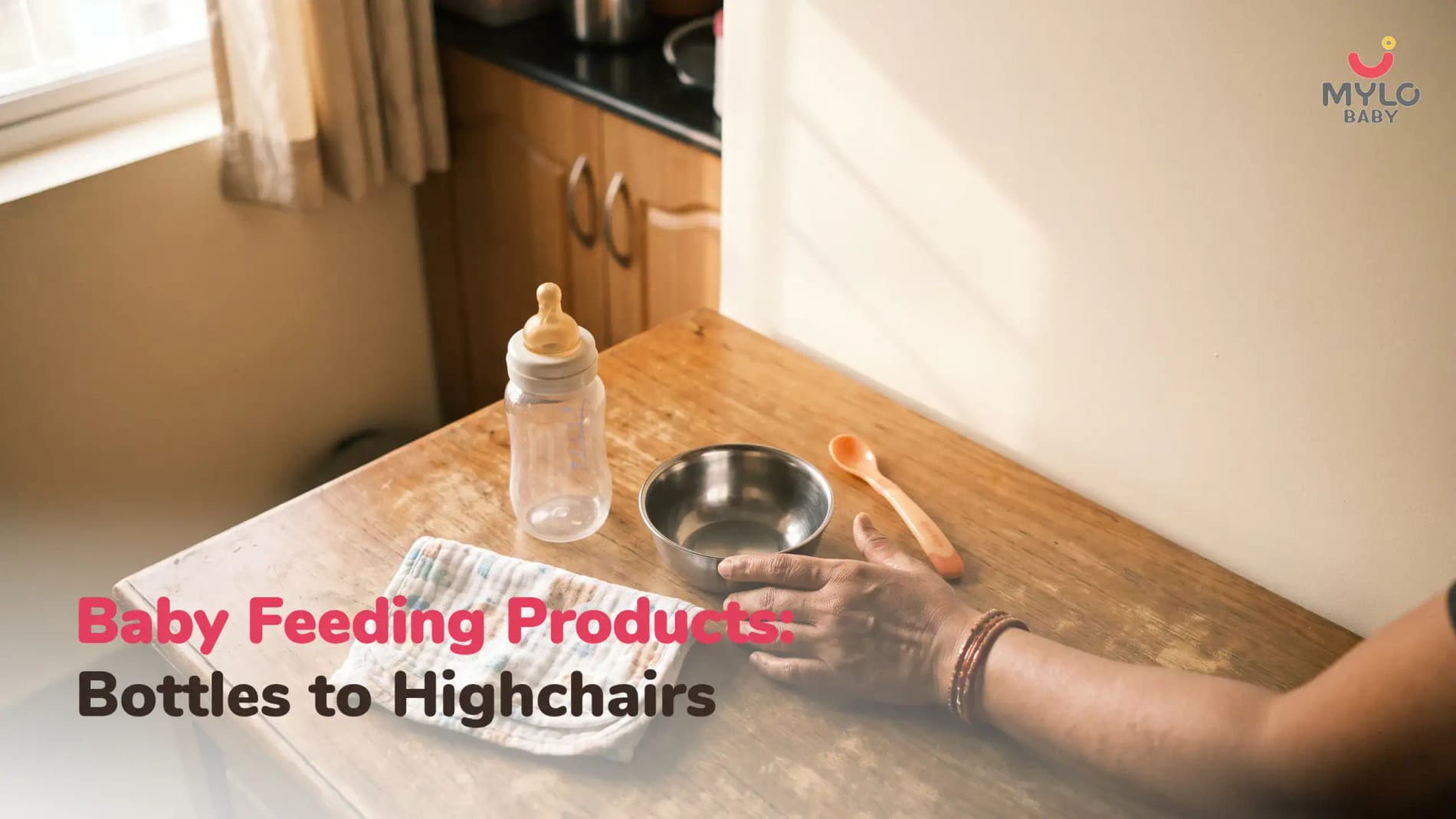
TL;DR
The right feeding products, bottles, sterilizers and highchairs, make feeding safer and easier, whether you are bottle-feeding expressed milk or formula, or starting solids (NHS, UNICEF). Choose BPA-free or glass bottles with an age-appropriate teat flow, and clean and sterilize them properly, since young babies need extra protection from germs. A good highchair is one with a sturdy base and a five-point safety harness, used from around 6 months when your baby can sit with support. You do not need to over-buy; a few well-chosen, food-grade, easy-to-clean items are enough, and simple options like boiling and steel bowls work well. Always strap your baby into the highchair, never prop a bottle, and replace worn teats.
Quick Answer
Feeding products like bottles, sterilizers and highchairs make feeding safer and easier. Choose BPA-free or glass bottles with the right teat flow for your baby's age, sterilize properly, and pick a sturdy highchair with a five-point harness from around 6 months. Buy only the essentials, and never prop a bottle.
Author: Mylo Editorial Team, Mylo Parenting Desk Medically reviewed by: Mylo Editorial Board, aligned with WHO, NHS, AAP and IAP guidance Last updated: 23 June 2026
Medical Disclaimer: This article is for general informational and product-safety guidance only and is not a substitute for professional medical advice. Breastfeeding is recommended where possible; for feeding choices, formula, or any concerns about your baby's feeding, follow your pediatrician's advice.
Key Takeaways
Bottles, sterilizers and highchairs make feeding safer and easier (NHS)
Choose BPA-free plastic or glass bottles with an age-appropriate teat flow
Clean and sterilize feeding equipment properly, especially in the first year
Boiling is a free, effective way to sterilize bottles
Use a highchair with a sturdy base and a five-point harness from around 6 months
Always strap your baby into the highchair and never leave them unattended
Never prop a bottle, and replace worn or cracked teats
Buy only the essentials; food-grade, easy-to-clean items are enough
Why Do Feeding Products Matter?
The right feeding equipment supports safe, comfortable feeding at every stage, from bottle-feeding a newborn to a toddler learning to eat at the table (NHS, UNICEF). Good products are made from safe, food-grade materials, are easy to clean, and have features that protect your baby, like a slow teat flow or a secure harness. While breastfeeding is recommended where possible, bottles and other gear help when feeding expressed milk or formula, and highchairs make starting solids safe and fuss-free. Choosing wisely keeps feeding hygienic and stress-free.
Featured answer: Feeding products like bottles, sterilizers and highchairs make feeding safer and easier. Choose BPA-free or glass bottles with an age-appropriate teat flow, sterilize equipment properly, and pick a sturdy highchair with a five-point harness for when your baby starts solids around 6 months. Buy only the essentials, always strap your baby into the highchair, and never prop a bottle.
How Do You Choose the Right Baby Bottle?
Bottles vary in shape and material, and the right one is the one that suits your baby and is easy to keep clean (NHS, AAP).
Type or material | What to know |
|---|---|
Standard bottle | Common and works well for most babies |
Wide-neck bottle | Easier to fill and clean |
Anti-colic bottle | Vented to reduce swallowed air and wind |
Glass bottle | No chemicals and durable, but heavier and breakable |
BPA-free plastic | Light and sturdy; always check it is BPA-free |
The teat (nipple) flow also matters: use a slow flow for newborns and move to faster flows as your baby grows, since the wrong flow can cause choking or too much air.
How Should You Sterilize Feeding Equipment?
Young babies have developing immune systems, so cleaning and sterilizing bottles and feeding items protects them from germs, usually through the first year (NHS, CDC). Always wash items first, then sterilize.
Method | How it works | Note |
|---|---|---|
Boiling | Boil in water for 5 to 10 minutes | Free, traditional and effective |
Electric steam sterilizer | Steams items in a machine | Fast and easy |
Microwave steam sterilizer | Steams in the microwave | Quick, needs a microwave |
Cold water sterilizing | Soak in a sterilizing solution | Handy when travelling |
What Should You Look for in a Highchair?
A highchair is useful from around 6 months, once your baby can sit upright with support (AAP, NHS). Safety is the priority.
Feature | Why it matters |
|---|---|
Five-point safety harness | Prevents falls; the most important feature |
Sturdy, stable base | Will not tip over |
Footrest | Adds comfort and support |
Easy to clean | Wipeable seat and removable tray |
Right height and fit | Suits your baby and your table |
✅ Feeding Product Safety Checklist
Run through these whenever you buy and use feeding gear:
Food-grade materials: Choose BPA-free plastic, glass or food-grade silicone and steel
Right teat flow: Slow flow for newborns, faster as your baby grows
Clean and sterilize: Wash after every use and sterilize through the first year
Check for wear: Replace cracked or sticky teats and damaged items
Five-point harness: Always strap your baby into the highchair
Never unattended: Stay with your baby in the highchair at all times
Never prop a bottle: Always hold your baby while bottle-feeding
Test the temperature: Warm milk in water, not the microwave, and test before feeding
A few safe, well-maintained items beat a cupboard full of gadgets. Hygiene and supervision matter most.
What Other Feeding Gear Is Useful by Stage?
Your feeding kit changes as your baby grows from milk to solids to self-feeding (UNICEF, AAP).
Stage | Useful items |
|---|---|
Bottle feeding | Bottles, age-appropriate teats, bottle brush, sterilizer |
Starting solids (around 6 months) | Highchair, bibs, soft-tip spoons, suction bowls |
Self-feeding (older baby) | Open or sippy cup, child-safe cutlery, small bowls |
A helpful tip: introduce an open or sippy cup from around 6 months, and aim to move away from bottles by about 12 to 18 months to protect teeth and encourage drinking from a cup.
What Feeding Product Mistakes Should You Avoid?
A few common mistakes can affect safety and hygiene (NHS, AAP):
Propping a bottle instead of holding your baby, which risks choking and ear infections
Leaving a baby unattended or unstrapped in a highchair
Using the wrong teat flow for your baby's age
Skipping proper cleaning and sterilizing
Heating milk in the microwave, which creates dangerous hot spots
Keeping cracked, worn or sticky teats instead of replacing them
Letting a baby fall asleep with a bottle, which harms teeth
Buying secondhand teats of unknown history
What Do Feeding Products Cost in India?
You can feed your baby safely on a modest budget. Boiling and steel utensils keep costs low.
Item | Typical cost (₹) | Note |
|---|---|---|
Baby bottle (each) | ₹150 to ₹800 | Glass or BPA-free plastic |
Boiling to sterilize | Free | Just a pot and water |
Electric or microwave sterilizer | ₹1,500 to ₹5,000 | Optional convenience |
Highchair | ₹2,000 to ₹10,000+ | Or an attachable booster seat |
Bibs, bowls and spoons | ₹100 to ₹800 | Steel katori and spoon work well |
Indian Context: What Indian Parents Should Know
Hygiene is key: With variable water quality, washing and sterilizing bottles well is important; boiling is a free, reliable method (CDC)
Steel works beautifully: Traditional steel katori, glass and spoon are safe, durable and chemical-free for weaning and feeding
Plan for power cuts: Boiling and cold-water sterilizing work without electricity, so you are never stuck
Do not over-buy: You do not need every marketed gadget; a few quality, food-grade essentials are enough
Protect teeth: Avoid prolonged bottle use and never let your baby sleep with a bottle, which causes tooth decay (bottle caries)
Buy new teats: If using a secondhand bottle, replace the teat, and always check items for damage
Emergency number: Dial 108 for ambulance services across most states
Myths vs Facts About Feeding Products
Myth | Fact | Source |
|---|---|---|
"Expensive bottles feed babies better" | Safe, clean, age-appropriate bottles are what matter | NHS |
"Washing is enough; sterilizing is unnecessary" | Sterilizing protects young babies from germs | CDC |
"You can microwave-heat a bottle of milk" | Microwaving causes hot spots; warm in water instead | NHS |
"A highchair harness is optional" | The harness prevents serious falls and is essential | AAP |
"Any teat flow is fine for any age" | The wrong flow can cause choking or too much air | NHS |
FAQs: Baby Feeding Products
How do I choose the right baby bottle? Choose a BPA-free plastic or glass bottle that is easy to clean, with a teat flow suited to your baby's age (NHS). Start with a slow flow for newborns and move to faster flows as your baby grows.
Sahi baby bottle kaise chunein? (Hinglish) BPA-free plastic ya glass ki bottle chunein jo saaf karne mein aasan ho, aur teat ka flow bachche ki umar ke hisaab se ho. Newborn ke liye slow flow se shuru karein aur badi umar mein tez flow par jayein. Glass mein chemicals nahi hote, lekin woh bhaari aur toot-ne wali hoti hai.
Do I need to sterilize baby bottles, and for how long? Yes, sterilizing protects young babies from germs, and it is generally advised through the first year (CDC). Wash items first, then sterilize by boiling for 5 to 10 minutes or using a steam or cold-water method.
Bottle ko sterilize karna zaroori hai? (Hinglish) Haan, chhote bachchon ko germs se bachane ke liye bottle sterilize karna zaroori hai, aam taur par pehle saal tak. Pehle achhe se dhoyein, phir 5 se 10 minute ubaalkar (boiling) ya steam ya cold-water method se sterilize karein. India mein boiling ek free aur bharosemand tareeka hai.
When should my baby use a highchair? A highchair is useful from around 6 months, once your baby can sit upright with support (AAP). Always use the five-point harness and never leave your baby unattended in it.
Is it safe to heat a bottle in the microwave? No. Microwaving creates hot spots that can burn your baby's mouth (NHS). Warm the bottle by standing it in warm water, then shake and test a few drops on your wrist before feeding.
Can I use steel bowls and spoons for my baby? Yes. Steel katori, glass and spoons are safe, durable and free of chemicals, making them excellent for weaning and feeding (UNICEF). They are also affordable and easy to sterilize by boiling.
When should my baby stop using bottles? Introduce an open or sippy cup from around 6 months and aim to move away from bottles by about 12 to 18 months (AAP). This protects teeth and encourages drinking from a cup.
References
NHS UK. "Bottle Feeding, Sterilising and Equipment." https://www.nhs.uk
UNICEF. "Infant Feeding and Equipment." https://www.unicef.org
American Academy of Pediatrics (AAP). "Healthy Children: Bottle Feeding and Highchair Safety." https://www.healthychildren.org
World Health Organization (WHO). "Infant and Young Child Feeding." https://www.who.int
Centers for Disease Control and Prevention (CDC). "Cleaning and Sterilising Infant Feeding Items." https://www.cdc.gov
Indian Academy of Pediatrics (IAP). "Infant Feeding Guidance." https://www.iapindia.org



Medical Disclaimer
This content is for informational purposes only and should not replace professional medical advice. Consult with a physician or other health care professional if you have any concerns or questions about your health. If you rely on the information provided here, you do so solely at your own risk.


AWARDS AND RECOGNITION

Mylo wins Forbes D2C Disruptor award

Mylo wins The Economic Times Promising Brands 2022
AS SEEN IN












- Mylo Care: Effective and science-backed personal care and wellness solutions for a joyful you.
- Mylo Baby: Science-backed, gentle and effective personal care & hygiene range for your little one.
- Mylo Community: Trusted and empathetic community of 10mn+ parents and experts.


Product Categories
Baby Carrier | Baby Soap | Baby Wipes | Stretch Marks Cream | Baby Cream | Baby Shampoo | Baby Massage Oil | Baby Hair Oil | Stretch Marks Oil | Baby Body Wash | Baby Powder | Baby Lotion | Diaper Rash Cream | Newborn Diapers | Teether | Baby Kajal | Baby Diapers Pants | Cloth Diapers | Laundry Detergent | Lactation Granules |