


Orders
.png&w=48&q=75 "login")
Profile


Wallet

Appendicitis in Pregnancy: Symptoms, Diagnosis, Surgery and Risks
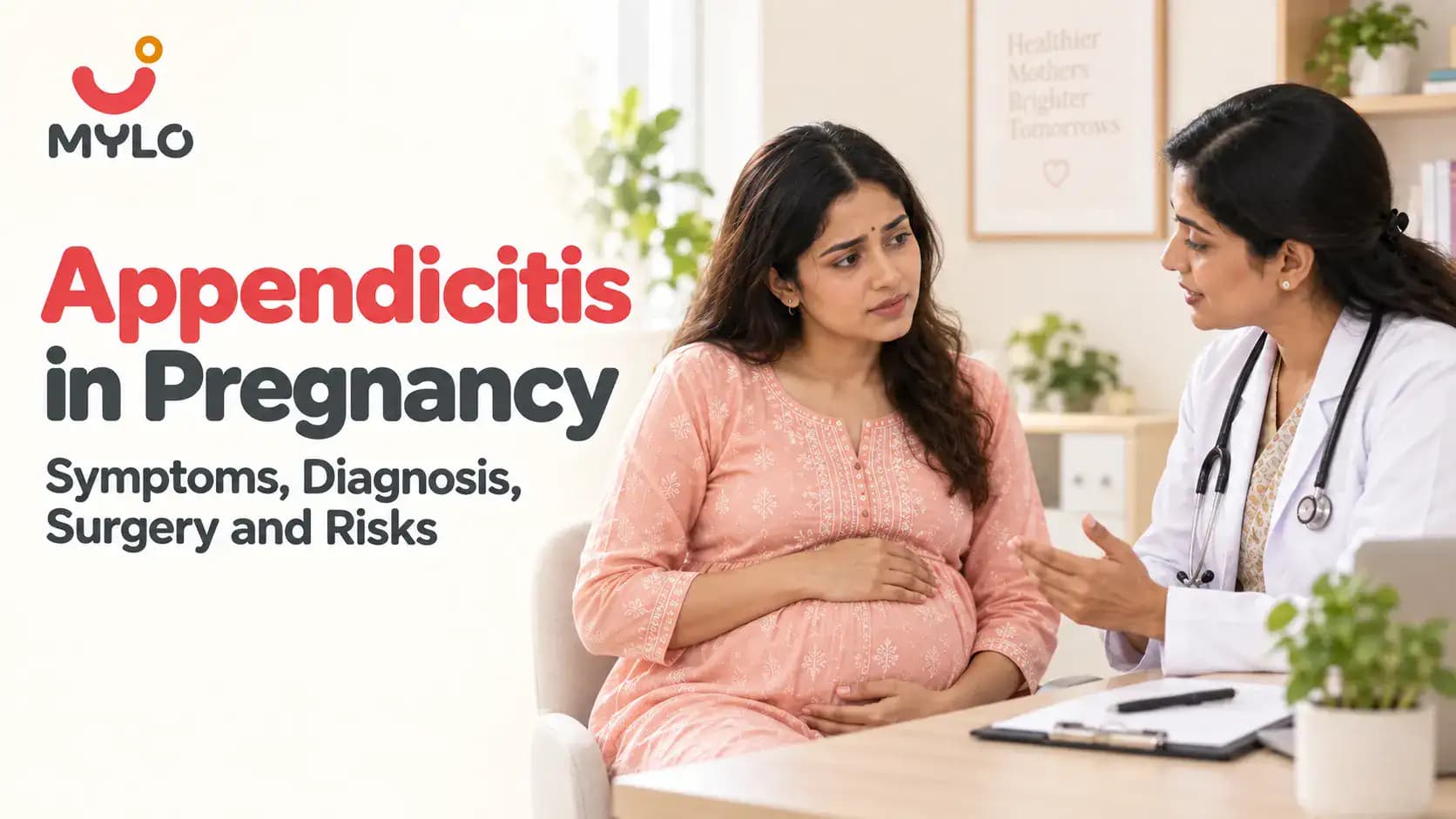
 12 min
Quick Answer
Appendicitis in pregnancy is inflammation of the appendix, and it is the most common non-obstetric surgical emergency in pregnant women. It can be harder to spot than usual, because the growing uterus pushes the appendix upward, so the pain may be higher in the abdomen rather than the classic lower-right spot, and its symptoms overlap with normal pregnancy discomforts. The treatment is surgery to remove the appendix (appendectomy), which is considered safe in pregnancy. The real danger is delay, so severe or persistent abdominal pain in pregnancy should always be checked urgently.
Key Takeaways
It is the most common non-obstetric surgical emergency in pregnancy (StatPearls, NIH).
It is harder to diagnose in pregnancy. The enlarging uterus displaces the appendix upward, so pain may be in the middle or upper-right abdomen, especially in the third trimester, not the usual lower right.
Symptoms overlap with normal pregnancy, such as nausea and mild abdominal discomfort, and even blood tests are less reliable, which is exactly why any severe or persistent pain needs prompt medical review.
Surgery is the treatment and is safe in pregnancy. Removing the appendix (appendectomy), by keyhole or open surgery, is the standard, and delaying it is more dangerous than the operation.
Delay raises the risk of the appendix bursting, which is more likely in pregnancy and can lead to preterm labour, so speed matters.
What Is Appendicitis in Pregnancy?
Appendicitis is inflammation of the appendix, a small finger-shaped pouch attached to the large intestine. It usually happens when the appendix becomes blocked, leading to swelling, infection and, if untreated, bursting (perforation) (StatPearls, NIH).
In pregnancy, appendicitis is the leading cause of non-obstetric surgery, occurring in roughly 1 in 1,000 or so pregnancies. It can happen in any trimester. Pregnancy does not cause appendicitis, but it does make it trickier to recognise, which is the single most important thing to understand about it.
Why Is Appendicitis Harder to Diagnose in Pregnancy?
This is the key point that most articles skip, and it is what makes appendicitis dangerous in pregnancy. Two things work against an easy diagnosis (StatPearls, NIH; systematic review, PMC):
The appendix moves. As the uterus grows, it pushes the appendix upward and outward. So the classic sign, pain low down on the right side, may instead appear in the middle or upper-right abdomen, particularly in the second and third trimesters. This can be mistaken for other causes of upper-abdominal pain.
The symptoms overlap with normal pregnancy. Nausea, vomiting, mild abdominal discomfort and loss of appetite are common in pregnancy anyway. Even the blood test for infection (white cell count) is naturally higher in pregnancy, so it is less reliable here.
The practical takeaway: do not assume abdominal pain in pregnancy is "just pregnancy". Persistent or severe pain deserves a proper check, because appendicitis can hide behind ordinary-seeming symptoms.
What Are the Symptoms of Appendicitis in Pregnancy?
The symptoms to watch for, keeping in mind that the pain may be higher than expected:
What you may notice | What to know |
|---|---|
Abdominal pain, often starting near the navel and settling on the right side | In pregnancy it may be mid or upper-right, not classic lower-right, especially later on |
Pain that is persistent and worsening | Appendicitis pain usually builds over hours and does not settle |
Nausea and vomiting | Common in pregnancy too, so it is the combination with pain that matters |
Loss of appetite | A classic feature of appendicitis |
Low-grade fever | Suggests infection |
Pain worse with movement, coughing, or pressing and releasing the abdomen | A common feature of appendix inflammation |
An important correction: vaginal bleeding is not a typical symptom of appendicitis. If you have vaginal bleeding in pregnancy, that is a separate red flag that needs urgent care for other reasons, but it is not how appendicitis usually presents. Appendicitis is about abdominal pain and gut and infection symptoms.
When To Seek Emergency Care
Because appendicitis is a surgical emergency and delay is dangerous, do not wait it out. Seek urgent medical care if you have:
Severe or persistent abdominal pain, especially on the right side or that is worsening
Abdominal pain with fever, nausea, vomiting or loss of appetite
Pain that is worse when you move, cough or press on your tummy
Any severe abdominal pain that is unlike your usual pregnancy aches
Go to a hospital or contact your maternity unit promptly. It is always better to be assessed and reassured than to delay with a condition that can worsen quickly. See Mylo's guide on when to make an emergency visit during pregnancy.
How Is Appendicitis Diagnosed in Pregnancy?
Diagnosis combines examination, tests and imaging, and doctors are careful to use methods that are safe in pregnancy (StatPearls, NIH; PMC review):
Clinical examination: your doctor checks where the pain is and how your abdomen responds, allowing for the displaced appendix.
Blood tests: checking for signs of infection, though results are harder to interpret in pregnancy.
Urine test: to help rule out a urinary tract infection, which can mimic appendicitis.
Ultrasound: the first-choice imaging in pregnancy, as it is safe and involves no radiation.
MRI: used when the ultrasound is not conclusive. MRI is considered safe in pregnancy and avoids the radiation of a CT scan, which is generally avoided.
Because the picture can be unclear, doctors sometimes have to make a judgement call, and they will err on the side of caution, since a missed appendicitis is more dangerous than an operation.
How Is Appendicitis Treated in Pregnancy?
The treatment is surgery to remove the appendix, called an appendectomy, and it is considered safe in pregnancy (StatPearls, NIH). This is the standard of care, because leaving an inflamed appendix risks it bursting.
Keyhole (laparoscopic) surgery is often used, especially in earlier pregnancy, and involves small cuts and quicker recovery.
Open surgery may be chosen depending on how advanced the pregnancy is and the clinical situation.
Antibiotics are given to treat and prevent infection.
The baby is monitored around the surgery, and the surgical and obstetric teams work together.
Why operate during pregnancy at all? Because the alternative is worse. An untreated, bursting appendix causes serious infection that endangers both mother and baby. The risks of the surgery are far smaller than the risks of delaying it. This is why doctors do not "wait and watch" a genuinely suspected appendicitis in pregnancy.
What Are the Risks to Mother and Baby?
Handled promptly, most women and babies do well. The risks come mainly from delay and perforation (the appendix bursting), which is more common in pregnancy and more likely the longer treatment is delayed, especially in the third trimester (systematic review, PMC):
A burst appendix causes widespread infection and is dangerous for both mother and baby.
Perforation, particularly later in pregnancy, can trigger preterm labour.
Prompt, uncomplicated surgery has much better outcomes than delayed treatment.
The message is not to be frightened of the surgery, but to be quick to seek care, because early treatment is what keeps both of you safe.
Recovery After Appendix Surgery in Pregnancy
Recovery depends on the type of surgery and how far along you are. In general:
You will be monitored in hospital, and your baby's wellbeing will be checked.
Keyhole surgery usually means a faster recovery and less pain than open surgery.
You will be advised on activity, wound care and pain relief that is safe in pregnancy.
Follow-up ensures both your recovery and your pregnancy are progressing well.
Report any fever, worsening pain, wound problems or signs of labour promptly after surgery.
Most women go on to have a healthy pregnancy after timely treatment.
Appendicitis in Pregnancy: Frequently Asked Questions
"Can pregnancy cause appendicitis?"
No. Pregnancy does not cause appendicitis, but it makes it harder to recognise, because the growing uterus moves the appendix and pregnancy symptoms overlap with appendicitis symptoms. Anyone can develop appendicitis, pregnant or not.
"Where is appendix pain during pregnancy?"
It may not be in the classic lower-right spot. As the uterus grows, the appendix shifts upward, so pain can be in the middle or upper-right abdomen, especially in the second and third trimesters. This is why appendicitis is easy to miss in pregnancy.
"Can your appendix burst while pregnant?"
Yes, and the risk of the appendix bursting (perforation) is actually higher in pregnancy, particularly if diagnosis is delayed and in the third trimester. A burst appendix is dangerous for mother and baby, which is why prompt care matters so much.
"Is appendix surgery safe during pregnancy?"
Yes. Appendectomy is considered safe in pregnancy and is the standard treatment. Delaying necessary surgery is more dangerous than the operation itself. The surgical and obstetric teams take special care to protect both you and your baby.
"How is appendicitis diagnosed safely in pregnancy?"
Through examination, blood and urine tests, and imaging that avoids radiation: ultrasound first, and MRI if needed. CT scans, which use radiation, are generally avoided.
"How do I tell appendicitis from normal pregnancy pain?"
It can be genuinely hard, which is the point. Appendicitis pain is usually persistent and worsening, often with fever, nausea, vomiting or loss of appetite, and is frequently worse with movement. Normal pregnancy aches usually ease and are not accompanied by fever. If in doubt, get checked, do not wait.
"Will appendicitis or the surgery harm my baby?"
Timely treatment gives the best outcomes for both of you. The main threat to the baby is a delayed or burst appendix, not the surgery. This is exactly why quick diagnosis and treatment are so important.
When To See a Doctor
Seek urgent care immediately if you have:
Severe or persistent abdominal pain, especially on the right side or worsening
Abdominal pain with fever, nausea, vomiting or loss of appetite
Pain that is worse with movement, coughing or pressing your tummy
Any severe abdominal pain that feels different from your usual pregnancy discomfort
Do not delay. Contact your maternity unit or go to hospital.
This article is for information only and does not replace urgent medical assessment. If you have severe abdominal pain in pregnancy, seek care now rather than waiting.
Bottom Line
Appendicitis is the most common non-obstetric surgical emergency in pregnancy, and its biggest danger is that it is easy to miss: the growing uterus shifts the appendix higher, and its symptoms blend into normal pregnancy discomfort. The treatment, surgery to remove the appendix, is safe in pregnancy, and the real risk comes from delay, which allows the appendix to burst and can trigger preterm labour. So the single most important thing to remember is simple: do not dismiss severe or persistent abdominal pain in pregnancy. Get it checked promptly, because with timely care, the outlook for both mother and baby is good.
References
All links verified live on 17 September 2026.
Appendicitis in Pregnancy — StatPearls, National Institutes of Health (updated June 2026). Source for appendicitis being the most common non-obstetric surgical emergency, the atypical presentation and displaced appendix, unreliable labs, imaging approach, and appendectomy as standard treatment.
Diagnosing Appendicitis in Pregnancy Via Ultrasonography — PubMed Central review. Source for ultrasound as first-line imaging, MRI when inconclusive, higher perforation risk in pregnancy, and third-trimester pain location.
When to make an emergency doctor visit during pregnancy and preterm labour — Mylo internal guides.

Article Posted Under
Related Articles



Medical Disclaimer
This content is for informational purposes only and should not replace professional medical advice. Consult with a physician or other health care professional if you have any concerns or questions about your health. If you rely on the information provided here, you do so solely at your own risk.


AWARDS AND RECOGNITION

Mylo wins Forbes D2C Disruptor award

Mylo wins The Economic Times Promising Brands 2022
AS SEEN IN













- Mylo Care: Effective and science-backed personal care and wellness solutions for a joyful you.
- Mylo Baby: Science-backed, gentle and effective personal care & hygiene range for your little one.
- Mylo Community: Trusted and empathetic community of 10mn+ parents and experts.


Product Categories
Baby Carrier | Baby Soap | Baby Wipes | Stretch Marks Cream | Baby Cream | Baby Shampoo | Baby Massage Oil | Baby Hair Oil | Stretch Marks Oil | Baby Body Wash | Baby Powder | Baby Lotion | Diaper Rash Cream | Newborn Diapers | Teether | Baby Kajal | Baby Diapers Pants | Cloth Diapers | Laundry Detergent | Lactation Granules |