


Orders
.png&w=48&q=75 "login")
Profile


Wallet

Foods That Help Boost Breast Milk Production: An Honest Guide
 19 min

BDS (Gold Medalist), Certified Lactation Consultant – BPNI Delhi, Maternal & Infant Nutrition Expert · 15 years experience
Key Takeaways
Quick overview in 30 seconds.webp&w=32&q=75)
- Breastfeeding mothers often worry about milk supply, and certain foods called galactagogues can naturally help stimulate lactation and support healthy milk production.
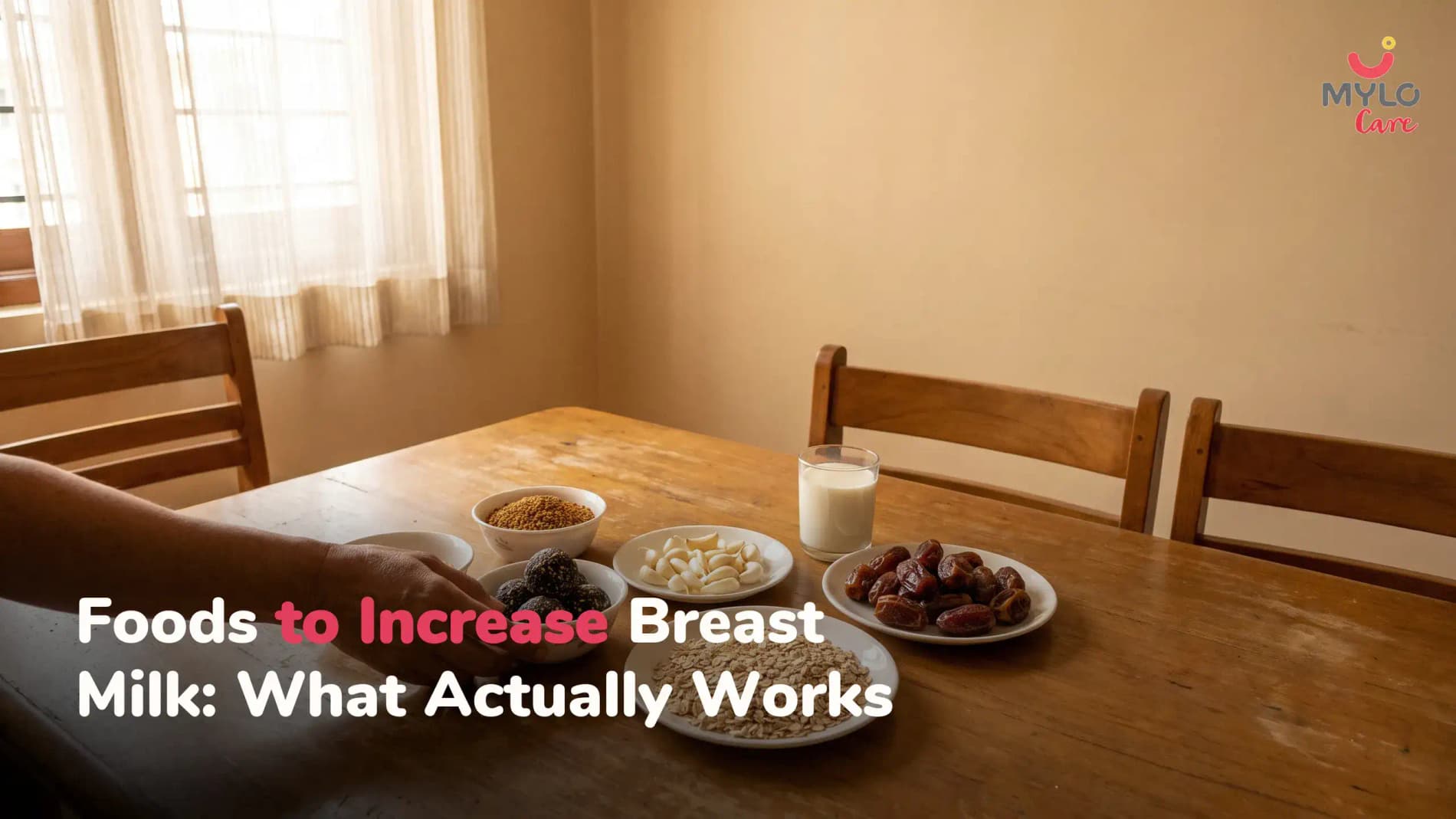
- Top foods that boost breast milk include oats, fenugreek seeds, spinach, almonds, garlic, fennel seeds, cumin, moringa, and dill seeds.
- Combining lactation-friendly foods with herbal supplements like Lactomama granules containing Shatavari, Safed Jeera, Sowa seeds, and Moringa can further support milk supply.
- Looking for a natural way to boost milk supply? Explore our Anti Colic Slow (S) Flow Grooved Baby Nipple - Pack of 2.
.webp&w=1900&q=75)
 4.5
4.5Quick answer
No food creates milk on its own. Milk production runs on supply and demand, so how often and how effectively your baby removes milk matters far more than what you eat. Foods such as oats, methi, moringa and leafy greens support your nutrition and recovery, which helps you sustain feeding. Eat well, feed often, and if supply is genuinely low, see a lactation consultant rather than changing your diet again.
Key takeaways
Effective, frequent milk removal is the main driver of supply. Food supports you. It does not replace feeding.
Most women who worry about low supply actually have enough. Check your baby's nappies, stools and weight gain before changing anything.
Methi (fenugreek) is not for everyone. Evidence for it is weak, and it needs caution if you have diabetes, thyroid disease, a chickpea or peanut allergy, or are on blood thinners.
If supply is genuinely low, there is usually a reason worth finding, such as latch problems, a tongue-tie, thyroid issues, PCOS, retained placenta or certain medications. None of these is fixed by food.
A baby who is not feeding well is a medical matter, not a dietary one. Fewer wet nappies, poor weight gain, deep sleepiness or reluctance to feed need same-day attention.
Does what you eat affect your breast milk supply?
Indirectly, yes. Directly, much less than people assume.
Milk production works on demand. The more often and more effectively milk is removed from the breast, the more your body makes. This is why a poorly latched baby feeding eight times a day can leave supply low, while a well-latched baby feeding the same number of times builds it up.
What food does is support the woman doing the feeding. Breastfeeding increases your energy and nutrient requirements meaningfully, and a mother who is undernourished, anaemic, dehydrated or exhausted will struggle to sustain feeding even if her milk-making machinery is fine. That is a real effect, and it is worth eating well for. It is just not the same as a food "boosting" milk.
Foods traditionally believed to increase milk are called galactagogues. Many are used across India, and several are nutritionally excellent. The honest position is that the evidence for any of them increasing supply is limited and mixed, and professional guidance consistently recommends addressing feeding and medical factors before turning to galactagogues.
Ten foods that support milk production and postpartum recovery
Food | What it actually provides | How to include it |
|---|---|---|
Oats | Iron, fibre, slow-release energy. Popular as a galactagogue, though evidence is limited | Porridge, oats chilla, oats added to roti dough |
Methi (fenugreek) | Iron, fibre. The most studied galactagogue, with mixed results. See cautions below | Methi leaves in sabzi or paratha, or a small amount of soaked seeds |
Spinach and leafy greens | Iron, folate, calcium, vitamin A | Palak, methi leaves, sarson, bathua, drumstick leaves |
Almonds and nuts | Protein, healthy fats, vitamin E, calcium | A small handful daily, or in laddoo and milk |
Garlic | Flavour compounds pass into milk and some babies feed more actively | Everyday cooking. No special preparation needed |
Saunf (fennel) | Traditional galactagogue, aids digestion | After meals, or as a light infusion |
Jeera and safed jeera (cumin) | Iron, traditional galactagogue, aids digestion | In dal, sabzi, buttermilk |
Moringa (drumstick, sahjan) | Iron, calcium, vitamin C, vitamin A. Among the better-studied traditional galactagogues | Drumstick in sambar, moringa leaves in dal or sabzi |
Sowa (dill seeds) | Traditional galactagogue, iron | In sabzi, or as a mild infusion |
Fluids: buttermilk, coconut water, dal water, soups | Hydration, electrolytes, some protein | Alongside meals and at every feed |
One note on all ten. These belong in a good postpartum diet on their nutritional merit, which is a solid reason to eat them. Whether any of them measurably increases milk output is not established, and you should not feel you have failed if your supply does not change after eating them.
A caution about methi (fenugreek)
Methi is recommended almost universally in Indian postpartum advice, usually without any qualification. It deserves some.
The evidence is weak. Studies have produced mixed results, sample sizes have been small, and preparations are not standardised, so one person's "methi water" is not comparable to another's.
Be careful with methi supplements, and speak to your doctor first, if you:
Have diabetes or gestational diabetes, since methi can lower blood sugar
Have thyroid disease, where effects have been reported
Take blood-thinning medication
Have a chickpea or peanut allergy, because cross-reactivity is possible
Have asthma, where reactions have occasionally been reported
Common effects to expect: digestive upset in you or your baby, and a maple-syrup-like smell in sweat and urine, which is harmless but surprising if you are not expecting it.
Methi as a vegetable or in ordinary cooking is a different matter from concentrated capsules or large quantities of seeds. Food amounts are fine for most women. Supplement doses are where the cautions apply.
Is your supply actually low?
This is the question to answer before changing your diet, buying a supplement or worrying for another week. Most women who believe their supply is low have enough milk. The signs people rely on are usually misleading.
Signs that do NOT mean low supply
What you notice | What it usually means |
|---|---|
Your breasts feel soft | Normal after the early weeks. Supply has regulated to your baby's needs |
Your baby feeds very often | Normal newborn behaviour. Cluster feeding in the evenings is typical |
You cannot pump much | Pumps are less efficient than a baby. Pump output is a poor measure of supply |
Your baby cries after a feed | Babies cry for many reasons, and hunger is only one |
You stopped leaking milk | Normal as supply settles |
Your baby takes a bottle after feeding | Babies will often accept a bottle even when full |
Your baby wakes at night | Normal, and continues well beyond the newborn stage |
Signs your baby IS getting enough
Nappies. From about day five onward, six or more heavy wet nappies in 24 hours
Stools. Regular soft, yellow, seedy stools in the early weeks
Weight. Back to birth weight by about two weeks, then steady gain along their growth chart
Feeding behaviour. You can hear or see swallowing, and your baby comes off the breast relaxed
Alertness. Active and alert when awake, with good skin colour and moist mouth
Signs that need medical attention today
Fewer than six wet nappies a day after the first week, or pale and infrequent stools
Not back to birth weight by two weeks, or losing weight
Very sleepy, hard to wake, or not waking to feed
Deepening yellow colour of the skin or eyes
Dry mouth, no tears, a sunken soft spot
Feeding for very long stretches and still seeming unsatisfied and unsettled
Persistent nipple pain or damage, which usually indicates a latch problem
If any of these apply, see your paediatrician or a lactation consultant the same day. The risk with articles like this one is that a mother spends two weeks on methi water while her baby is not feeding adequately. Food is not the intervention in that situation.
What actually increases milk supply
In rough order of impact:
Feed often, on demand. Around 8 to 12 times in 24 hours in the early weeks, including at night. Night feeds matter, because prolactin levels are higher then.
Get the latch checked. This is the most common fixable cause of low supply. A single session with a lactation consultant often resolves what weeks of dietary change could not.
Let your baby finish the first breast before offering the second. You do not need to "empty" the breast, and the breast is never truly empty. Let your baby come off on their own rather than switching by the clock.
Remove milk if a feed is missed. Express if you are separated from your baby or a feed is skipped.
Avoid unnecessary top-ups. Formula given without a medical reason reduces the demand signal and can start a cycle of falling supply. If top-ups are needed, ask how to protect supply alongside them.
Skin-to-skin contact, particularly in the early weeks.
Rest and eat. Not a cure, but exhaustion and undernutrition genuinely undermine sustained feeding.
When low supply has a medical cause
Genuine low supply often has a reason, and finding it matters more than any food.
Possible cause | Why it matters |
|---|---|
Ineffective latch or tongue-tie | The most common cause. Milk is not removed, so supply does not build |
Scheduled rather than on-demand feeding | Reduces the demand signal |
Early or unnecessary formula top-ups | Same effect, and often the start of a downward cycle |
Retained placental fragments | Can delay milk coming in. Usually accompanied by ongoing bleeding |
Significant blood loss at delivery | Can affect milk production |
Thyroid disorders | Both underactive and overactive thyroid can affect supply. Common and easily tested |
PCOS | Associated with supply difficulties in some women |
Insufficient glandular tissue, or previous breast surgery | Structural, and needs an individualised feeding plan |
Certain medications, including combined oral contraceptives and some decongestants | Can reduce supply. Tell your doctor you are breastfeeding before starting anything |
Severe anaemia or untreated nutritional deficiency | Affects your capacity to sustain feeding |
If your supply is genuinely low, ask for a proper assessment, including a feeding observation and, where indicated, thyroid and haemoglobin tests. That is a different conversation from a food list.
Do lactation supplements and granules work?
The evidence for herbal galactagogue supplements is limited, and professional guidance recommends addressing feeding and medical factors first.
Practical points if you are considering one:
Check the full ingredient list. Some blends contain herbs with their own cautions, including methi
Tell your doctor, especially if you have diabetes, thyroid disease, PCOS or are on any medication
Treat it as a nutritional supplement rather than a treatment. Many of these products are essentially calorie and nutrient dense foods, which has value in itself, particularly if you are eating poorly
Do not use a supplement in place of a lactation assessment if your baby is not gaining weight
Prescription galactagogues exist, but they have side effects and are a medical decision, not a self-started one
None of this means supplements are useless. It means they should sit at the end of the list, not the start of it.
Are there foods to limit while breastfeeding?
Far fewer than most families will tell you.
Item | Position |
|---|---|
Caffeine | Moderate amounts are generally fine. Roughly two to three cups of tea or coffee a day. Watch for a jittery or wakeful baby |
Alcohol | Best avoided. If you do drink, wait a few hours before feeding |
High-mercury fish | Limit large predatory fish such as shark, swordfish and king mackerel. Most Indian fish are fine |
Very spicy food | Usually fine. Most babies tolerate it. Stop only if you see a consistent reaction |
"Cold" foods, curd, rice, certain vegetables | Commonly restricted in traditional postpartum diets. There is no evidence these harm milk or the baby, and over-restriction reduces diet quality at a time when you need it most |
Everything else | No need to avoid on principle. Restriction lists tend to grow, and a very narrow diet is a genuine problem for a recovering mother |
If you genuinely suspect your baby reacts to something you eat, discuss it with your paediatrician before cutting out food groups, particularly dairy.
What Indian mothers should know
Eat enough. Breastfeeding raises your energy and protein requirements significantly. ICMR guidance recommends additional energy and protein during lactation. Many Indian postpartum diets are restrictive at exactly the point when intake should rise.
Vitamin B12 deserves specific attention. If you eat a vegetarian or largely vegetarian diet, B12 deficiency is common in India and it directly affects the B12 content of your milk. Deficiency in a breastfed baby can have serious consequences. Ask your doctor about testing and supplementation rather than assuming your diet covers it.
Iron and anaemia. Postpartum anaemia is very common and leaves you exhausted, which affects everything else. Get your haemoglobin checked rather than assuming tiredness is just the newborn stage.
Calcium and vitamin D. Both are commonly low. Ask whether supplementation is appropriate for you.
Traditional foods. Panjiri, gond ke laddoo, ajwain, dry fruits and ghee-based preparations are calorie and nutrient dense, culturally valued, and reasonable in moderation. They are supportive nutrition rather than milk boosters, and they are not a substitute for balanced meals.
Restrictive jaappa diets. Where family custom excludes many vegetables, curd or certain foods for weeks, the practical approach is usually negotiation rather than confrontation. Ask your doctor to say explicitly what you should be eating, which tends to carry more weight at home than your own preference.
Hydration. Drink to thirst, and keep water beside you at every feed. Drinking excessive amounts does not increase supply, and forcing litres of water is unnecessary.
Myths and facts
Myth | Fact |
|---|---|
Drinking more milk makes more milk | Cow's milk does not increase supply. Drink it for calcium and protein if you like it |
Your breasts must feel full for there to be milk | Soft breasts are normal once supply regulates |
If you cannot pump much, you have low supply | Pump output is a poor measure of what your baby gets |
Eating ghee or laddoos increases milk | They provide calories and nutrients, which helps you. They do not directly increase milk |
Spicy food, garlic or masala harm the baby | Most babies tolerate normal family food |
You must drink litres of water daily | Drink to thirst |
Poor diet means poor quality milk | Breast milk stays remarkably consistent. Poor diet depletes the mother first, which is why nutrition matters for you |
Stress dries up your milk instantly | Stress can temporarily affect let-down. It does not permanently end supply |
A supplement will fix low supply | Fix the feeding and rule out medical causes first |
When to see a lactation consultant or doctor
Book help promptly if:
Feeding hurts, or your nipples are cracked or bleeding
Your baby is not gaining weight as expected
There are fewer than six heavy wet nappies a day after the first week
Feeds take a very long time and your baby still seems unsettled
You have been told your baby has a tongue-tie
You are considering starting formula because of supply concerns
You have repeated blocked ducts or mastitis
You have PCOS, thyroid disease, previous breast surgery or a difficult delivery with heavy bleeding
Seek medical care the same day if your baby is:
Very sleepy or difficult to wake for feeds
Increasingly yellow in the skin or eyes
Passing very few wet nappies, or has a dry mouth
Refusing to feed
Losing weight, or not back to birth weight by two weeks
If a lactation consultant is not available near you, ask your paediatrician or hospital about teleconsultation. Latch assessment works reasonably well over video, and one session often resolves what weeks of dietary changes will not.
Frequently asked questions
Which food increases breast milk the fastest?
None reliably. Frequent, effective feeding is what increases supply. Foods support your nutrition and recovery, which helps you keep feeding.
Does drinking more water increase milk supply?
No. Drink to thirst. Being dehydrated is unhelpful, but drinking beyond thirst does not produce more milk.
How much methi should I take?
Methi as a vegetable or in normal cooking is fine for most women. Concentrated supplements need a conversation with your doctor first, especially if you have diabetes, thyroid disease, a chickpea or peanut allergy, or take blood thinners.
My breasts feel soft. Has my milk reduced?
Usually not. Soft breasts are normal once supply adjusts to your baby's needs, typically after the first few weeks.
I can only pump 30 ml. Is that low?
Pump output is not a reliable measure of supply. Babies remove milk far more effectively than pumps. Judge by nappies, stools and weight gain instead.
Do lactation granules or supplements work?
The evidence is limited. They can be useful nutrition if you are eating poorly, but they are not a substitute for a latch assessment or for ruling out medical causes of low supply.
Can stress reduce my milk supply?
Stress can temporarily interfere with let-down, so milk may flow more slowly. It does not switch off production. Keeping feeds frequent is what protects supply.
Should I avoid spicy or "cold" foods during jaappa?
There is no evidence that normal spiced food or so-called cold foods harm your milk or your baby. Over-restriction is more likely to be a problem than the foods themselves.
Do I need a B12 supplement if I am vegetarian?
Possibly, and it is worth testing. B12 deficiency is common in India, passes through to your milk, and matters for your baby. Ask your doctor rather than self-supplementing.
When should I see a lactation consultant?
Early, if feeding hurts, if your baby is not gaining weight as expected, or if you are worried about supply. Early help is far more effective than help sought after weeks of difficulty.
The bottom line
Eat well because you are recovering from birth and doing physically demanding work, not because a particular food will turn on your milk. Oats, methi, moringa, greens, nuts and good hydration all earn their place nutritionally, and none of them will fix a latch problem, a tongue-tie or a thyroid issue. If you are worried about supply, check your baby's nappies, stools and weight first, and if anything looks off, get a lactation assessment rather than another food list.
Sources
Academy of Breastfeeding Medicine, Clinical Protocol #9: Use of Galactogogues in Initiating or Augmenting Maternal Milk Production
World Health Organization, infant and young child feeding guidance
UNICEF, breastfeeding support resources
American Academy of Pediatrics, breastfeeding and the use of human milk
NHS, breastfeeding and low milk supply
National Institutes of Health, LactMed, Drugs and Lactation Database
Indian Council of Medical Research and National Institute of Nutrition, dietary guidelines for Indians and nutrient requirements during lactation
Indian Academy of Pediatrics, infant feeding guidance
Breastfeeding Promotion Network of India (BPNI)
This article is for general information and is not a substitute for medical advice. If your baby is not gaining weight, is very sleepy, is passing few wet nappies or is becoming more yellow, seek medical care the same day.

Trusted by Breastfeeding Mamas Nurturing Their Little Ones
Gentle herbal support to help boost milk supply naturally while keeping you nourished through your breastfeeding journey.


Article Posted Under
Related Articles




Related Topics
.webp&w=32&q=75)
Medical Disclaimer
This content is for informational purposes only and should not replace professional medical advice. Consult with a physician or other health care professional if you have any concerns or questions about your health. If you rely on the information provided here, you do so solely at your own risk.


AWARDS AND RECOGNITION

Mylo wins Forbes D2C Disruptor award

Mylo wins The Economic Times Promising Brands 2022
AS SEEN IN













- Mylo Care: Effective and science-backed personal care and wellness solutions for a joyful you.
- Mylo Baby: Science-backed, gentle and effective personal care & hygiene range for your little one.
- Mylo Community: Trusted and empathetic community of 10mn+ parents and experts.


Product Categories
Baby Carrier | Baby Soap | Baby Wipes | Stretch Marks Cream | Baby Cream | Baby Shampoo | Baby Massage Oil | Baby Hair Oil | Stretch Marks Oil | Baby Body Wash | Baby Powder | Baby Lotion | Diaper Rash Cream | Newborn Diapers | Teether | Baby Kajal | Baby Diapers Pants | Cloth Diapers | Laundry Detergent | Lactation Granules |